Function
Prime mover that converts fuel into mechanical rotation
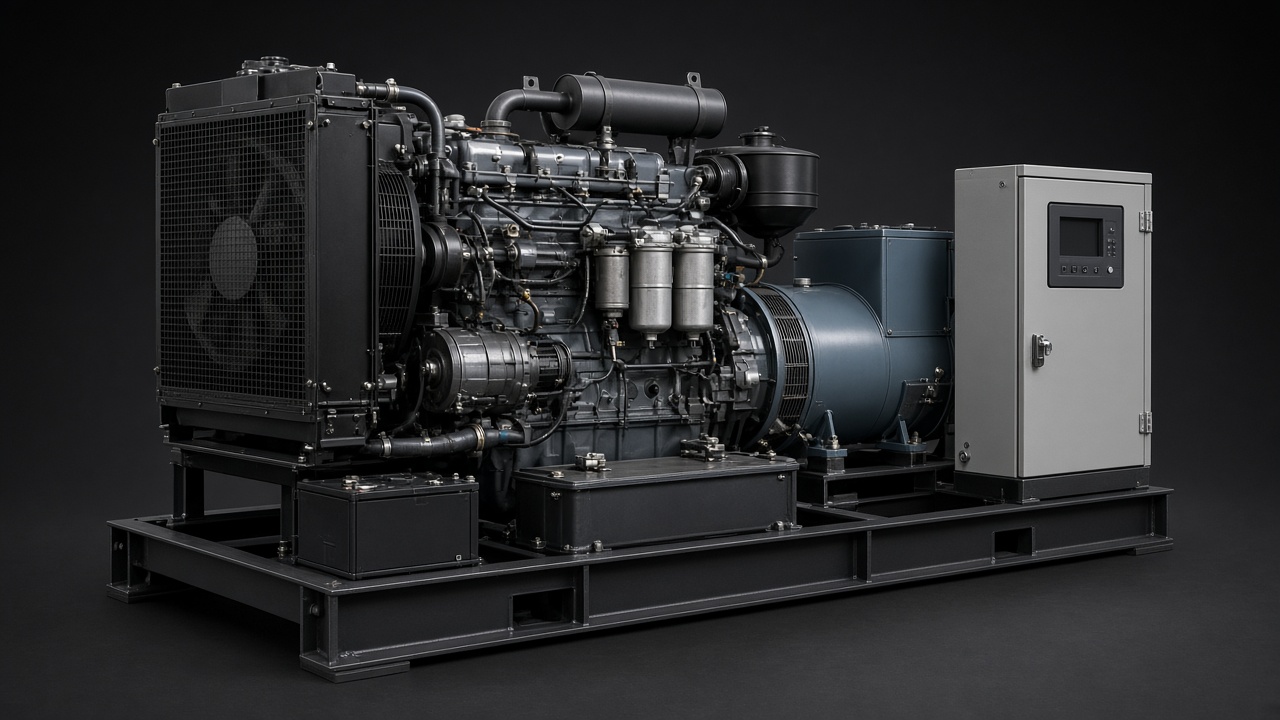
The diesel engine is the heart of the set. Fuel burns in the cylinders, turns the crankshaft, and that rotation is passed to the alternator. Engine size, speed, and cooling type must match the required power, site altitude, and duty cycle.
Service note
Typical service items: oil, oil filter, fuel filter, air filter, belts, coolant.
Function
Converts engine rotation into electrical power
The alternator (generator end) produces AC voltage and current. Its kVA rating, voltage, frequency, and insulation class must match the load and the local grid standard. Overheating, moisture, and unbalanced loads are common causes of early failure.
Service note
Check winding temperature, AVR setting, and bearing condition during service.
3
Coupling & Flywheel Housing
Function
Connects the engine shaft to the alternator
The coupling and flywheel housing keep engine and alternator aligned so power is transferred smoothly. Misalignment, loose bolts, or worn discs cause vibration, noise, and bearing damage. Alignment is checked after transport or major overhaul.
Service note
Listen for new vibration after moving the set.
4
Radiator & Cooling System
Function
Removes engine heat so the set can run continuously
The radiator, fan, coolant, and hoses keep engine temperature in a safe range. Restricted airflow, low coolant, or a blocked core quickly reduces available power. For enclosed or container sets, hot-air discharge and fresh-air inlet must be designed together.
Service note
Keep fins clean and check coolant level before long runs.
Function
Stores diesel for the planned running hours
The day tank or base-frame tank feeds the engine. Capacity is chosen from fuel burn and required autonomy. Water, dirt, and old fuel clog filters and damage injectors. Return lines, vents, and leak-free fittings are part of a safe installation.
Service note
Drain water regularly and use clean, specified diesel.
Function
Provides cranking power to start the engine
The starter motor cranks the engine using battery current. Weak batteries, corroded terminals, or an undersized charger are a common reason a standby set fails to start. Battery voltage, charge rate, and cable size should match the engine manufacturer data.
Service note
Test start weekly on standby sets and keep terminals clean.
Function
Starts, protects, and monitors the generator set
The control panel includes the controller, breakers, instruments, and protection logic. It can start the set locally or automatically on mains failure. Alarms for low oil pressure, high temperature, overspeed, and reverse power protect the machine and the load.
Service note
Record alarm history; repeated trips usually point to a real site issue.
Function
Removes exhaust gas and reduces noise
The exhaust manifold, flexible joint, silencer, and outlet pipe discharge combustion gas safely away from people and air intakes. Back-pressure that is too high reduces engine power. Heat shields and rain caps are needed on outdoor installations.
Service note
Never run the set in a closed room without a designed exhaust route.
9
Air, Oil & Fuel Filters
Function
Protect the engine from dust, wear, and dirty fuel
Filters are the most common consumable parts. A blocked air filter starves the engine of air. A dirty fuel filter causes hard starting and power loss. Oil filter changes follow the service interval for the engine model and operating hours.
Service note
Keep spare filters with the correct part number for the engine.
Function
Carries the set and reduces vibration to the floor
The steel base frame holds engine, alternator, tank, and often anti-vibration mounts. A weak or twisted frame causes alignment problems after transport. Lifting points and forklift pockets must be used as designed; do not lift from pipes or the radiator.
Service note
Inspect mounts and frame welds after rough transport.